
The ideas here were posted on Instagram on November 19, 2026.
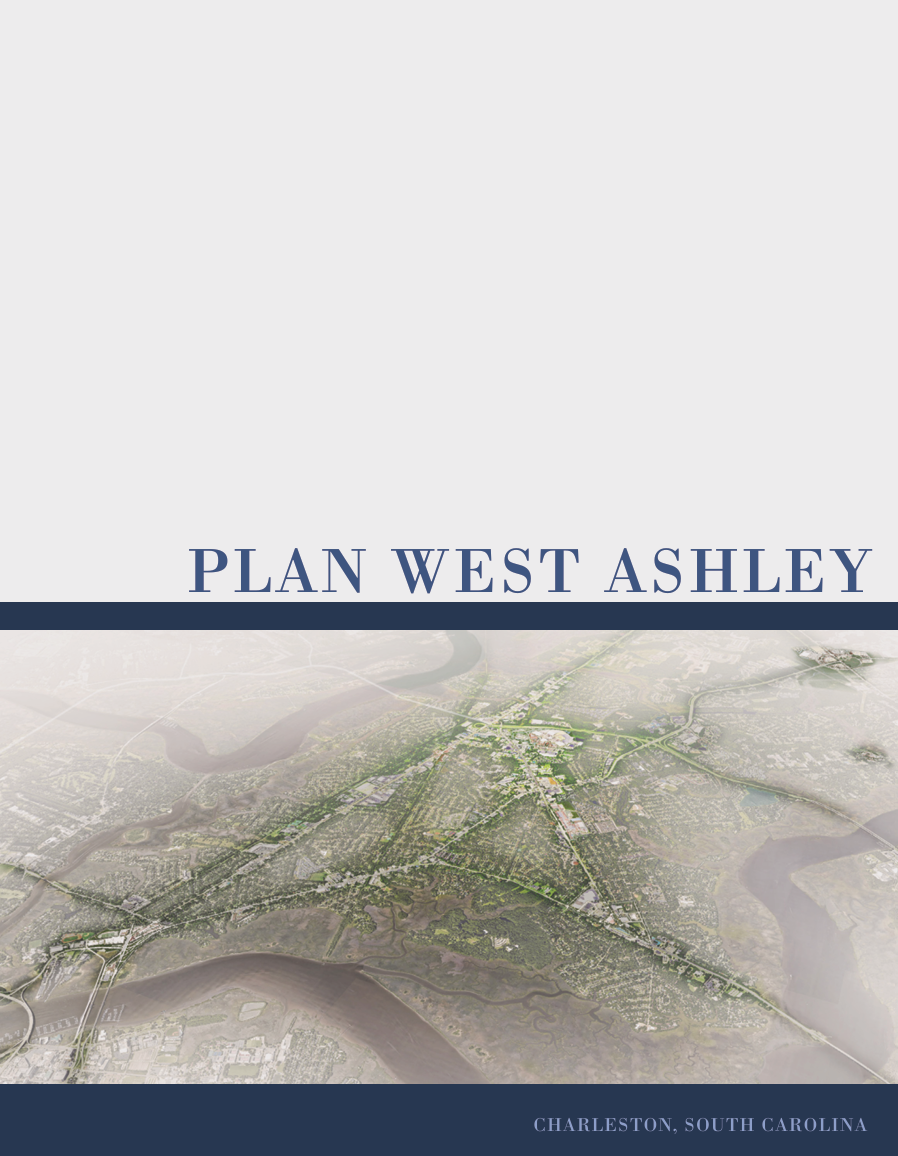
Charleston is experiencing rapid, sustained population growth. Population growth often defaults to outward suburban sprawl, bringing the challenges of traffic, building into wetlands, and creating isolated subdivisions. However, this growth presents a critical opportunity: channeling new investment into revitalizing existing neighborhoods instead of building more sprawl.
In 2018, the City of Charleston adopted Plan West Ashley, a comprehensive master plan designed to address this exact challenge for its suburb of West Ashley. At the time, West Ashley had a population of over 70,000 residents, and that number has grown further to over 80,000 today. Rather than leaving growth to chance, the plan outlined how strategic redevelopment could directly benefit existing residents alongside newcomers. Yet, like many ambitious municipal planning documents, much of Plan West Ashley has sat on a shelf—even though its core ideas remain both realistic and financially viable today.
A Blueprint for Strategic Redevelopment
Plan West Ashley focused on targeted interventions to transform some of the area’s most visible, underutilized commercial corridors, instead of accepting aging strip malls and generic, auto-oriented "anywhere America" development. Key to this was the targeted redevelopment of several highly visible (and highly underused) sites throughout West Ashley, turning auto-oriented development into a string of vibrant, walkable nodes distributed throughout the community.
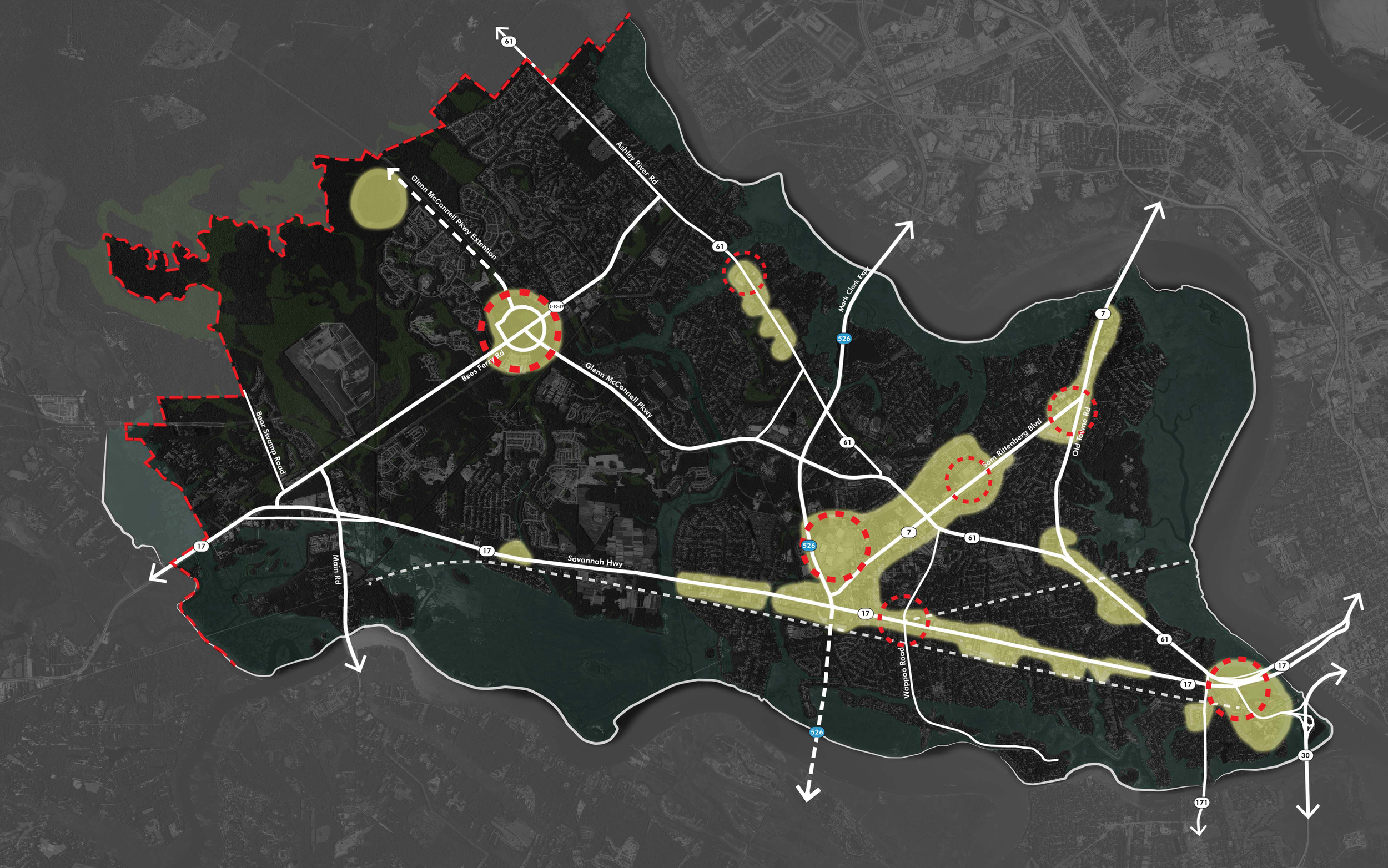
The sites and areas identified for ‘targeted redevelopment’ across West Ashley.
The idea of ‘targeted redevelopment’ towards these commercial strips makes a lot of sense for a few simple reasons:
At the time, some of the largest shopping centers in West Ashley were struggling with high vacancy rates, with a 27% vacancy rate across the shopping centers that were studied at the time.
These shopping centers are largely separated from the residential areas where people live, making redevelopment less intrusive on the day-to-day lives of nearby residents; a redeveloped shopping center is more politically viable than a redeveloped neighborhood.
Due to their high visibility, access to major corridors, and present-day ability to support stores, these sites are the best-positioned to realistically support town-center-style redevelopment while being connected to nearby roads and public transit.
Modeled after existing neighborhood hubs like Avondale and East Montague (Park Circle), these "mini Avondales" were designed to weave housing, commerce, and civic life together in a walkable format. The result would have been real, tangible places that people could weave into their lives and take pride in, just like how the neighborhoods around Avondale have done for decades now.
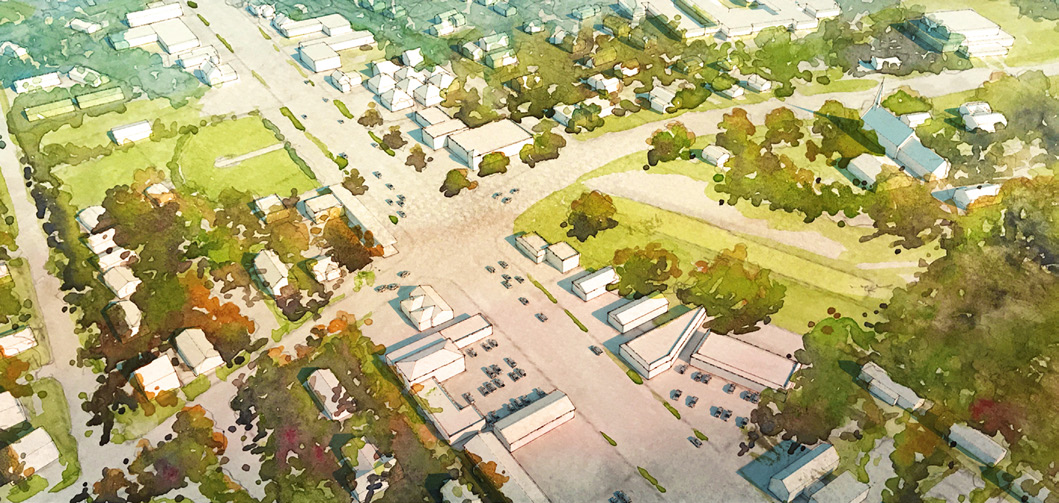
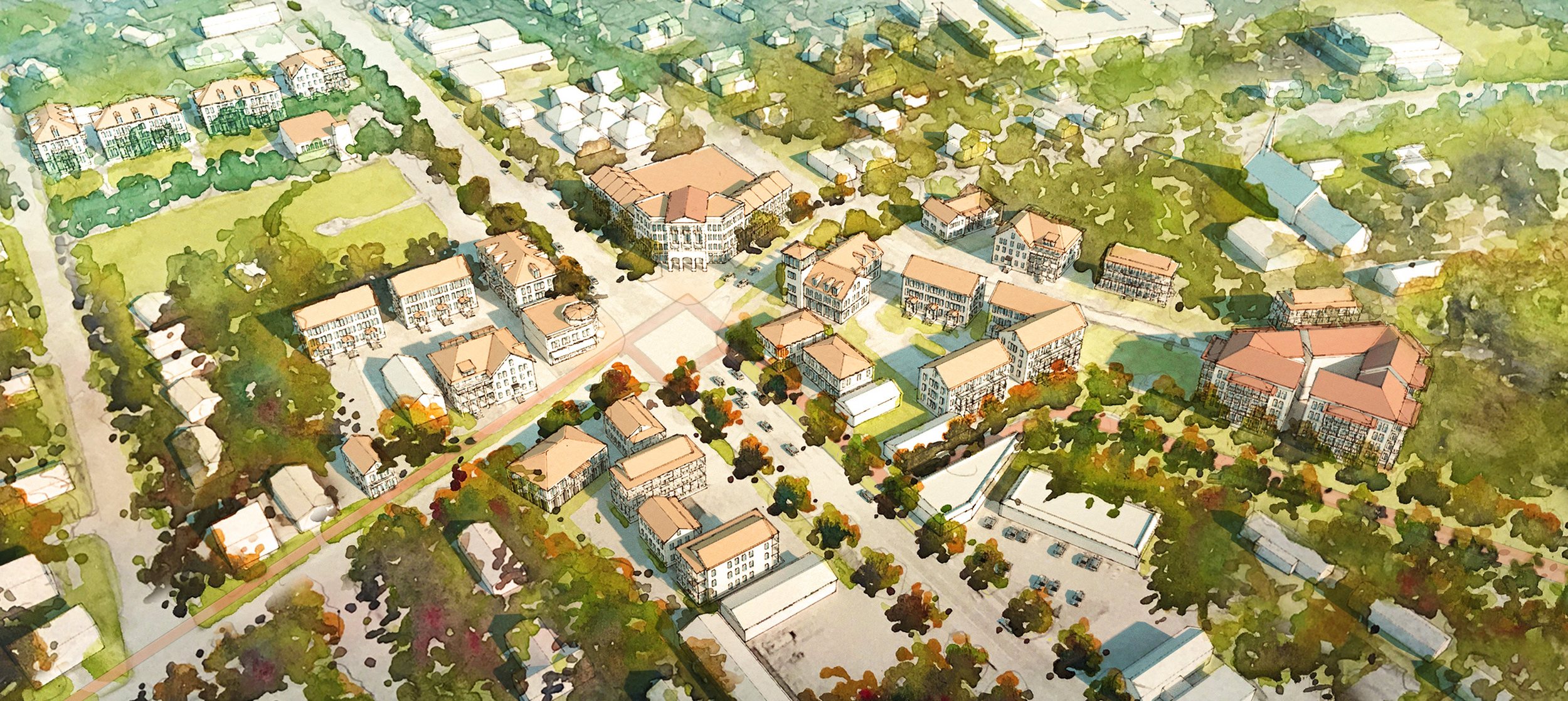
Some of these visions are very distinctly urban, but not all of them have to be. For parts of outer West Ashley, outside the I-526 loop, these town centers can be scaled down to fit a ‘small town’ aesthetic and match the character of the surrounding neighborhoods. This was the case where the plan approached Ashley River Road at the intersection of Old Parsonage Road, reimaging the unused parking lot there for a small community square with a farmer’s market.
The concept had to be adaptable to work throughout West Ashley, not just in one or two spots. Key to Plan West Ashley was for these spaces to be scattered throughout West Ashley; the plan aimed to bring parks, farmers markets, outdoor dining, and regular community events within a short walk or bike ride of nearly every resident in the suburb.
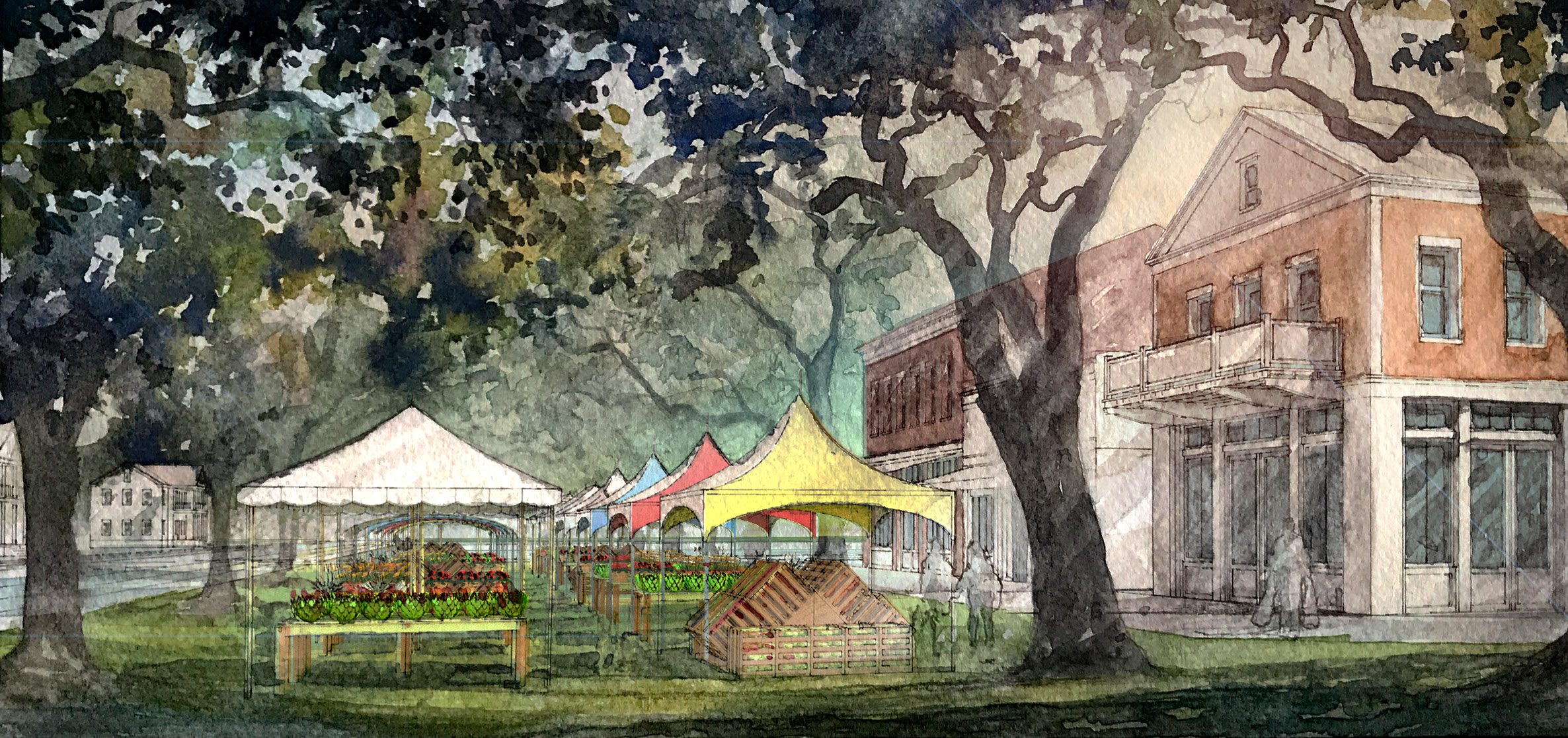
A farmer’s market and community park concept at the intersection of Ashley River Road and Old Parsonage Road. Today, the same location is home to an empty parking lot and a now-demolished strip mall.
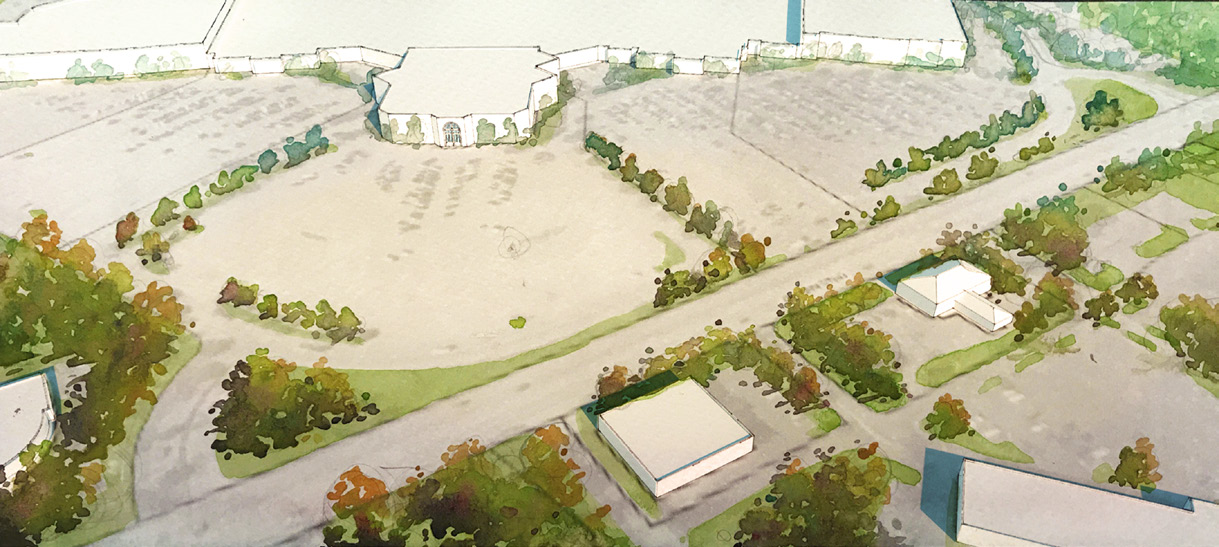
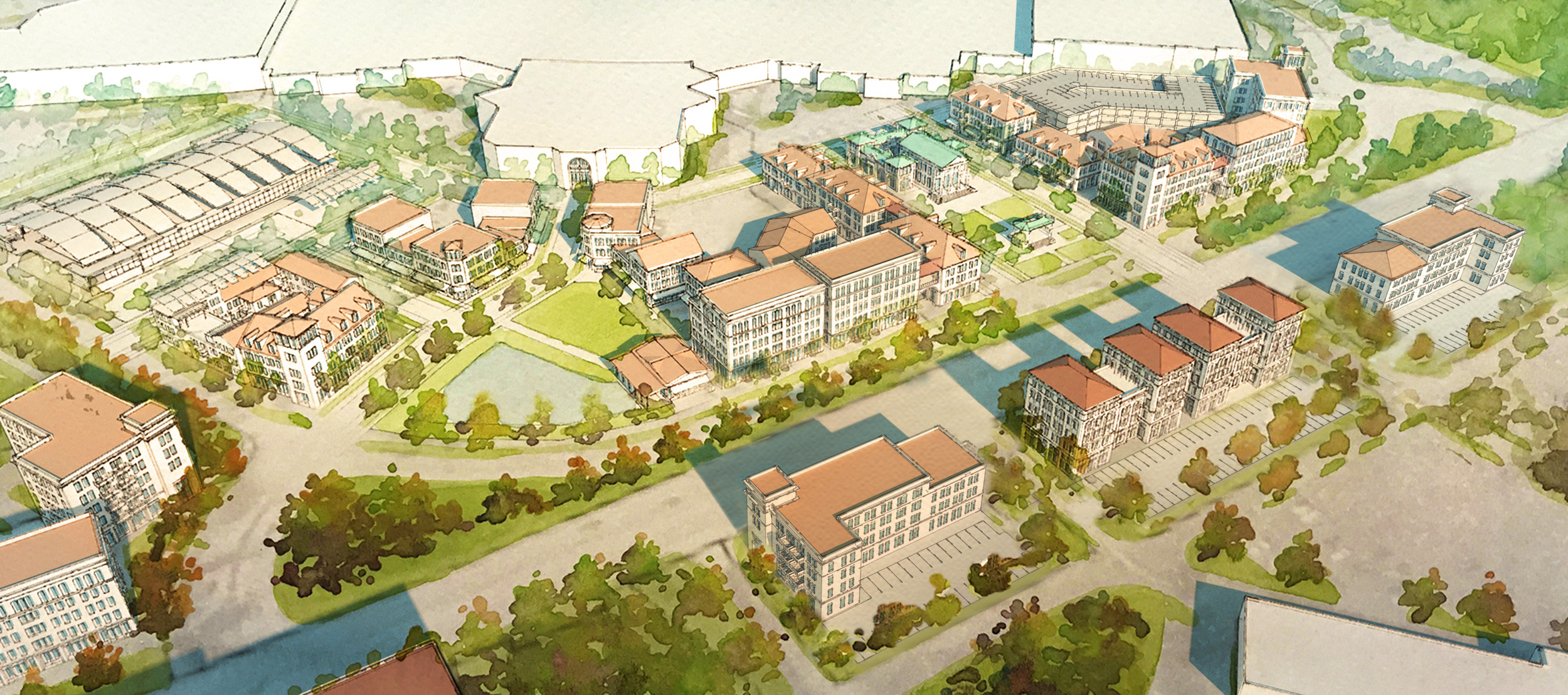
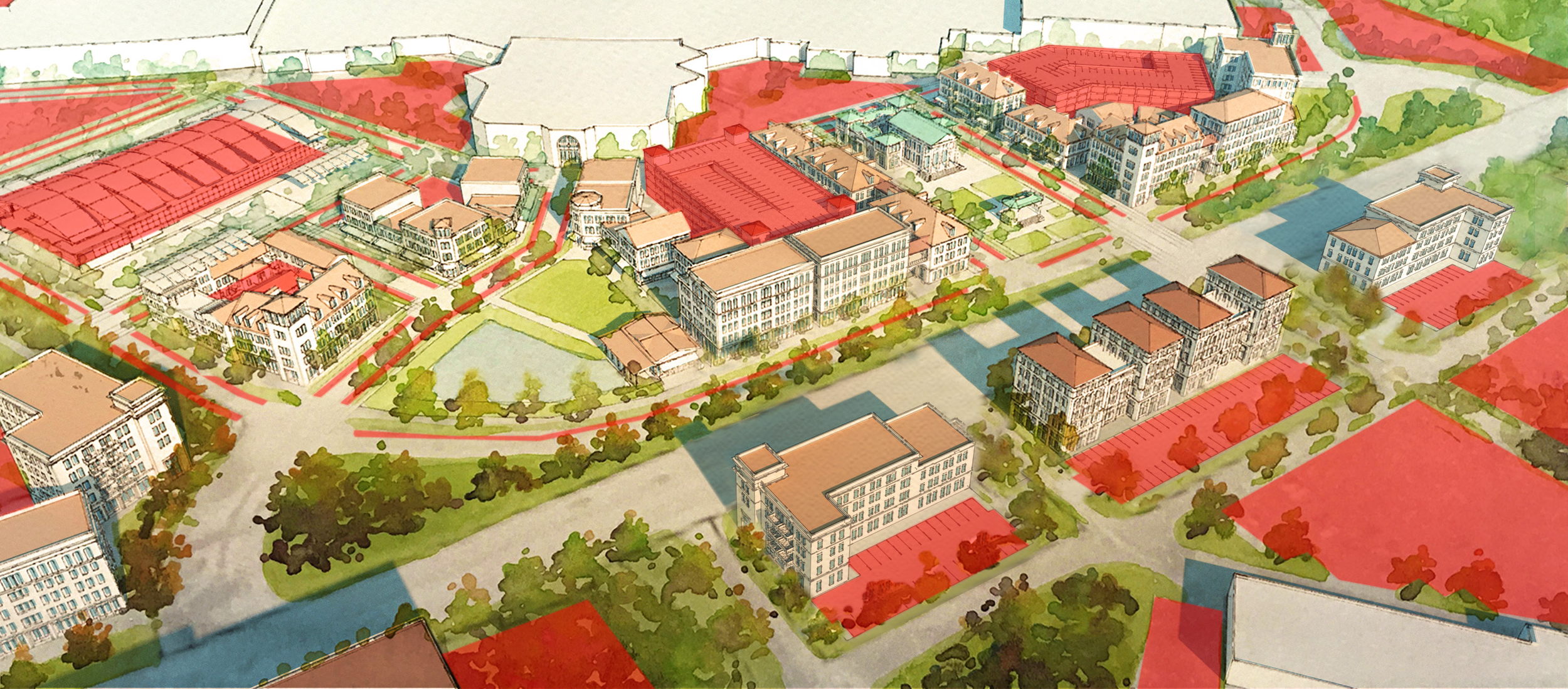
Perhaps the boldest, and most highly anticipated, vision within Plan West Ashley focused on the Citadel Mall. At the time the plan was drafted, the mall had recently gone through foreclosure and was up for sale, leaving its future deeply uncertain. Like many traditional indoor shopping malls across the country, it sat surrounded by a sea of underutilized parking lots—an enormous footprint of prime land in the center of West Ashley that was ripe for redevelopment, even if the rest of the mall was left intact.
Plan West Ashley recognized that this moment of uncertainty was a once-in-a-generation opportunity. The Citadel Mall was reimagined as a complete, mixed-use urban center. The vision called for breaking up the site with a walkable street grid, framing public greens and plazas with mid-rise apartment buildings and office space, and anchoring the site with major community assets—including a dedicated regional transit hub, structured parking to free up land for buildings and parks, and even a competitive swimming facility.
From Concept to Reality
Every concept in the master plan was grounded in market feasibility, designed to harness private-sector investment rather than rely solely on public subsidies. Mixed-use, walkable neighborhoods consistently generate higher revenues per acre than single-story strip malls and surface parking lots, all while requiring less new road and utility infrastructure per resident. When cities update zoning codes and streamline approvals to allow these projects, the market responds.
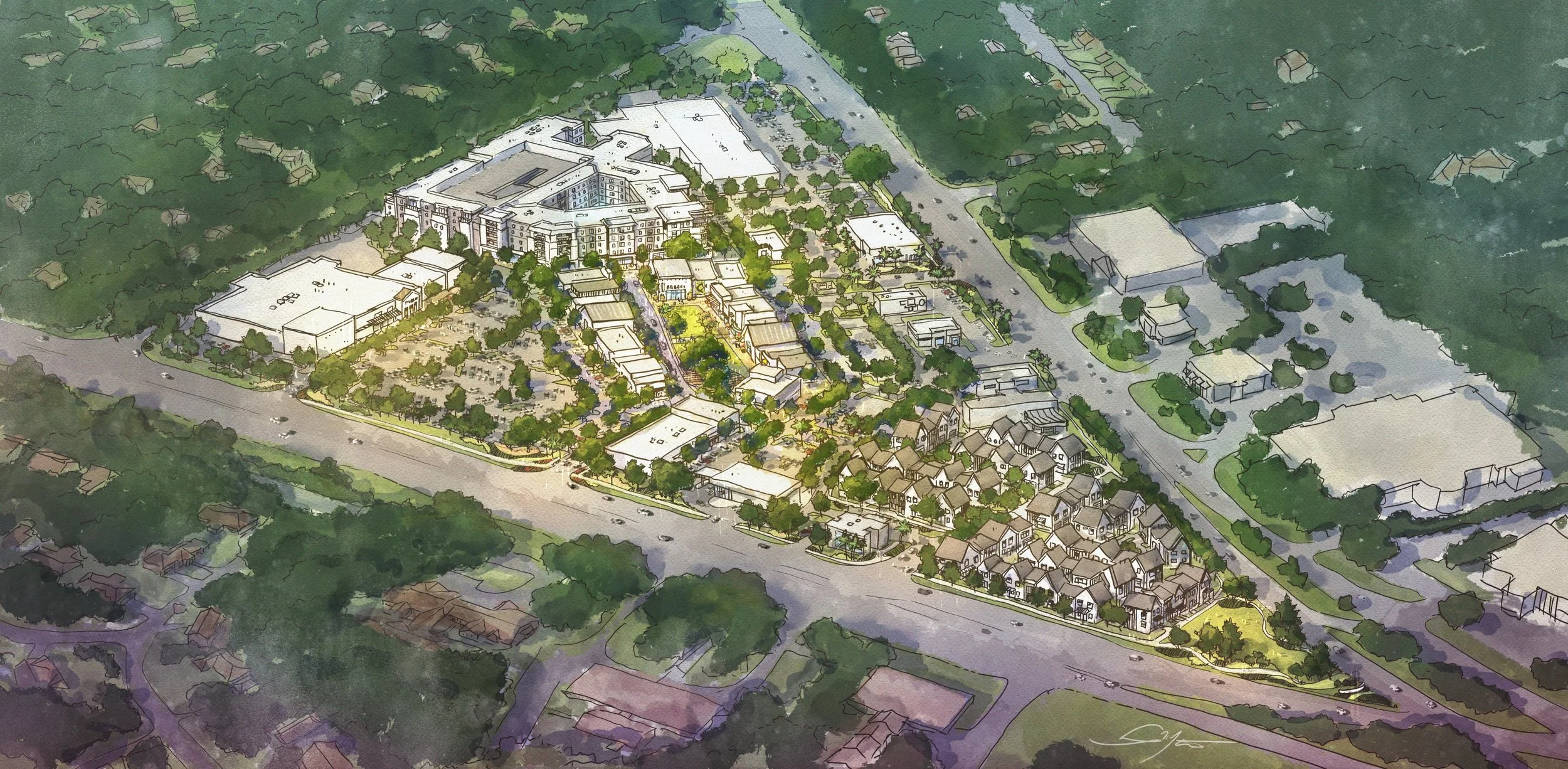
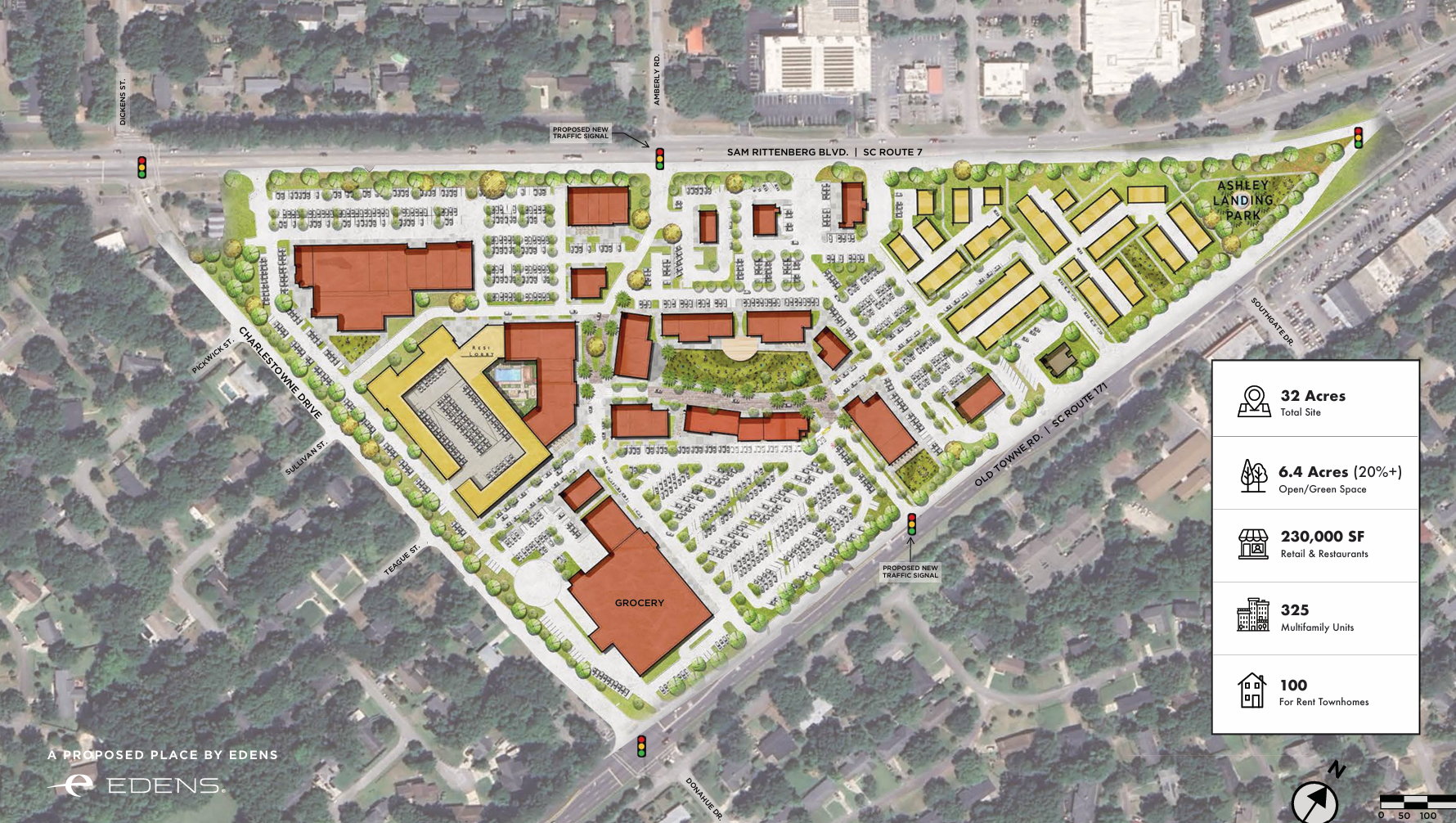
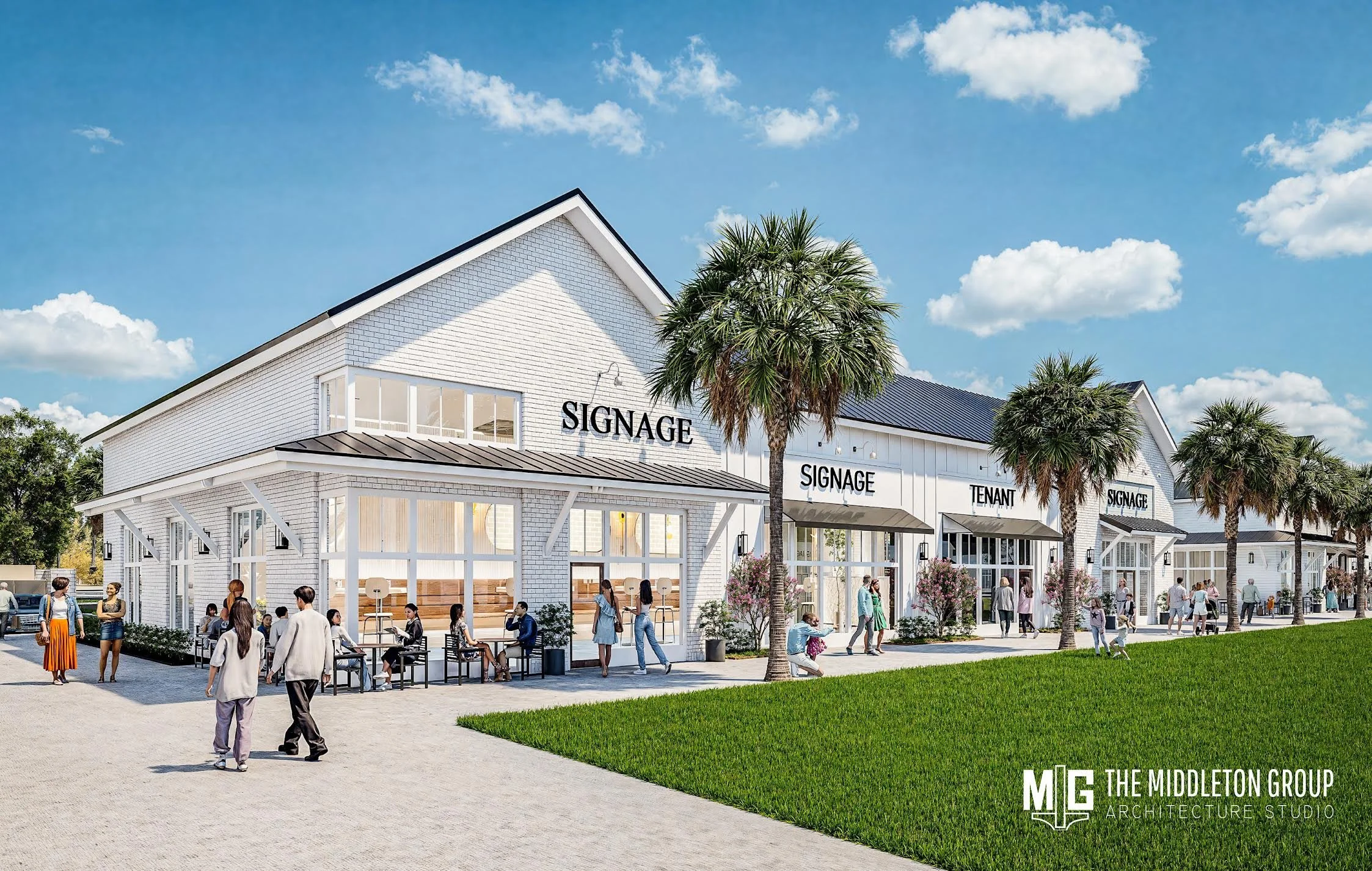
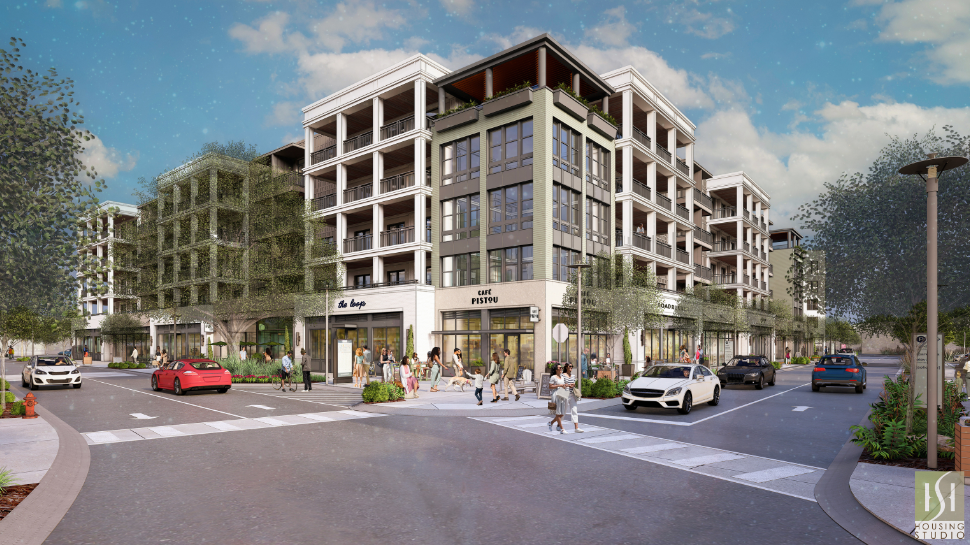
The ongoing redevelopment of Ashley Landing proves this. Ashley Landing was an aging shopping center that had been struggling with vacancies for years. It was also one of the many sites identified in Plan West Ashley for redevelopment. The City of Charleston bought a portion of the site, and has since partnered with private property owners and developers to redevelop not just the shopping center, but a much larger area of land totally 35 acres. The end result will be a new ‘mini town center’ with new apartments, small-scale retail fit for small businesses, and a central community square. It is currently under construction with full support from the City of Charleston.
Moving Forward
West Ashley is still growing, and the demand for housing, retail, and community amenities shows no sign of slowing down. The central question facing Charleston is not whether growth will happen, but where and how it will take shape. We can allow that growth to continue spilling outward—consuming rural areas, lengthening commutes, and entrenching car dependency—or we can channel it inward to repair and elevate the neighborhoods we already have.
Cities spend substantial time, money, and community input creating these thoughtful master plans, only to put them away on a shelf once the plan is completed. Plan West Ashley already did the hard work of mapping out how a suburb of 80,000 people can grow into a connected, walkable, and resilient community. We do not need to leave this plan on the shelf. By dusting off this blueprint—and bringing the same bold, place-based ambition to corridors across West Ashley, really, across the entire Charleston region—we can ensure that residents actually benefit from the growth that is coming to Charleston.
